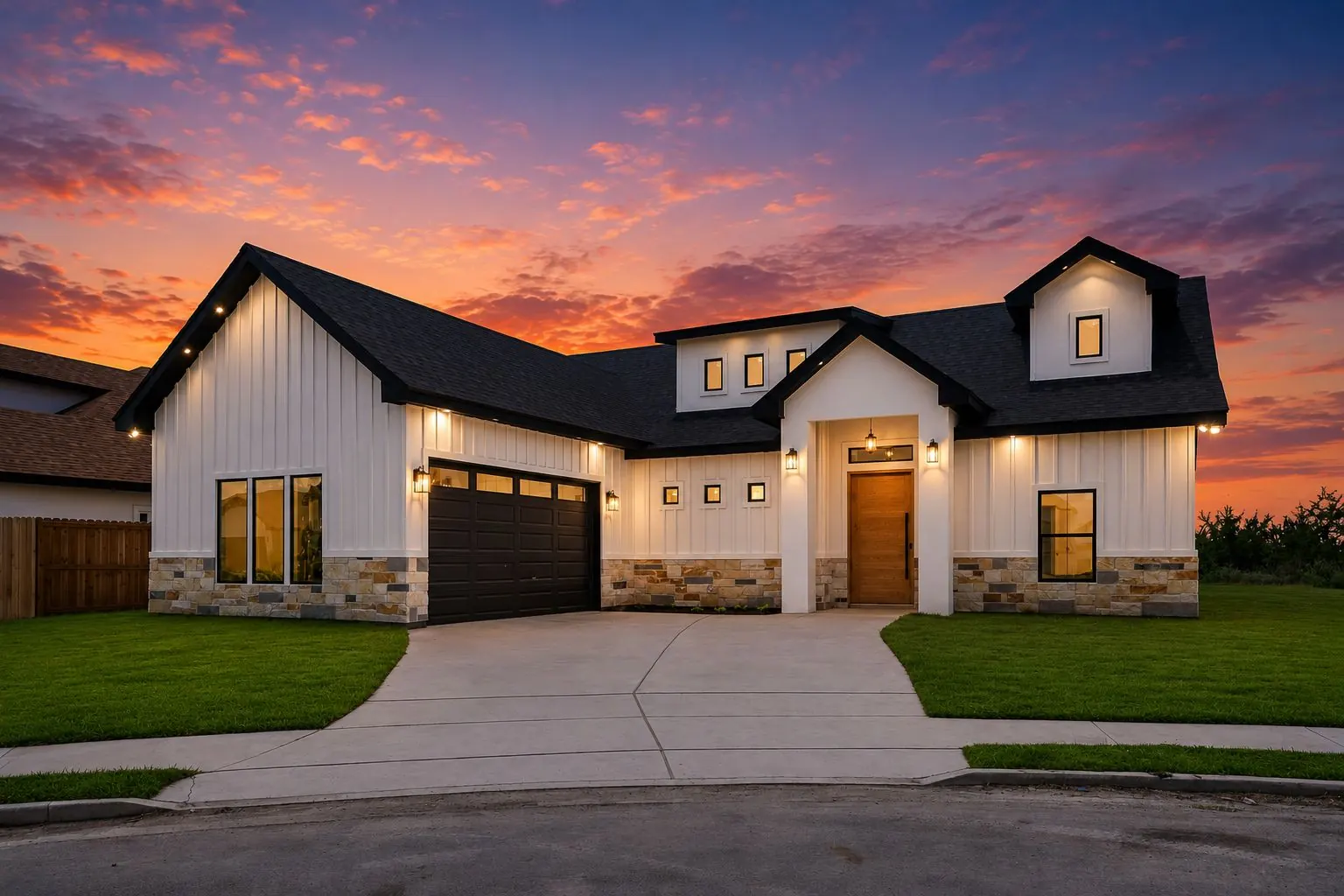
From First Conversation to Handover
Building a custom home is a big step, and it should never feel like a mystery. This is the sequence for a financed home with Kratos.
How Building With Kratos Works
Every project is different, so steps and timing vary, and your Kratos team will walk you through yours.
Inquiry and qualification
You tell us about the home you have in mind: where you plan to build, whether you own land, your construction budget (not including land), your financing and when you would like to start. Kratos reviews your answers to understand the appropriate next step. Submitting an inquiry is not a confirmed consultation, financing approval or construction commitment.
Consultation and financing pre-approval
These two steps can happen in either order. In a consultation we talk through your goals, your lot and how you want to live in the home. Financing pre-approval is handled with a lender and helps establish what you can borrow for the project. If you plan to pay in cash, let us know and we will talk through the appropriate next steps.
Design deposit
For financed buyers, a design deposit follows pre-approval and begins your floor-plan work. A design deposit is not a signed construction contract, and it does not mean your loan has closed.
Floor-plan development
Your floor plan is developed around how your family lives, your lot and your construction budget. The time this takes depends on the home, and your Kratos team will talk through expectations with you.
Contract review and signing
You review the construction contract with Kratos before you sign it. Take the time you need, and ask about anything that is not clear.
Lender processing and loan closing
For financed homes, your lender processes your construction loan and schedules the loan closing. Timing depends on the lender and on your file. A signed contract is not the same as a funded loan closing.
Construction
Kratos builds your home according to the agreed plans and selections, and keeps you informed as the project moves forward.
Walkthrough and handover
Near completion you walk through the home with the Kratos team, and the home is handed over under the terms of your contract.
This page describes the general sequence. It is not a contract, a guarantee of timing or an offer of financing. Specific terms are set out in the documents you review with Kratos.
Building a Custom Home in Hidalgo County
Kratos builds in Hidalgo County, Texas. Which office approves your home depends on where your lot sits, so it is worth knowing that before you fall in love with a floor plan.
Inside a city
If the lot is inside a city, that city’s building department handles permits. In Edinburg, for example, the City of Edinburg Building Safety Department is responsible for plan review, permit issuance and inspections. Cities set their own paperwork: McAllen’s residential checklist, for one, says a building permit application cannot be submitted without a recorded plat (City of McAllen: residential permit submittal checklist). Rules differ from city to city, so the office for your lot is always the final word.
Outside city limits
On unincorporated land, Hidalgo County’s Planning Department requires a development permit before construction starts on a new home (Hidalgo County: Permitting and Development FAQ; Hidalgo County development permit application). The county form also says water and electric service clearances go through the same county approval, so connecting utilities is part of the same process rather than an afterthought.
Flood zones
Check your lot’s flood zone early at the FEMA Flood Map Service Center. For lots the county maps in zones A, AE, AH or AO, the county will not issue a clearance until the Flood Plain Administrator approves a development permit that includes an elevation certificate. Inside Edinburg, the city engineering department reviews elevation certificates (City of Edinburg Engineering: floodplain). A flood-zone lot can still be built on, but it shapes the design and the site work, which is why we ask about your location first.
Septic or sewer
If your lot has no sewer connection, a septic system (an on-site sewage facility) needs its own permit. Texas requires one to construct or install it, and it is issued by a local authorized agent or, where there is none, by a TCEQ regional office (TCEQ: on-site sewage facility (septic) permits).
Checked against the sources linked above on October 26, 2026. Permit rules and fees change; confirm with the permitting office for your lot before you rely on any of this.
Starting Before You Own Land
You do not need to own a lot to begin. Many families start with the conversation and the financing, then choose land with both in hand.
In your inquiry, “I’m looking for land” and “Not sure yet” are real answers. The useful work before you buy land is checking what a lot will need, because that changes what you can build on it.
A short list to check on any lot you are considering:
- Which permit office covers it. A city, or Hidalgo County for unincorporated land.
- Whether it is platted. Some cities will not accept a building permit application without a recorded plat.
- Its flood zone. Look it up on FEMA’s map service before you make an offer.
- Sewer or septic. A lot without sewer needs a septic permit and system.
- Water and electric. Which provider serves it and how the connection is cleared.
On the financing side, how land is handled depends on the loan program. As one federal example, HUD’s FHA construction guidance says the borrower must either be buying the land at the closing of the construction loan or already own it (HUD Mortgagee Letter 2019-08 (FHA construction loans)). Your lender will tell you which options apply to you.
What Shapes a Construction Budget, and How It Differs From Land
When Kratos asks for your budget, we mean the construction budget, which does not include land. Land is its own cost.
Custom homes with Kratos start in the $160s, and land is separate. Your construction price depends on your home design, finishes and project requirements. What moves it:
- The design. Size, layout and how the home is shaped.
- Finishes and selections. The choices you make with the Kratos team.
- The lot. Flood-zone requirements, septic versus sewer and utility connections can all add site work.
- Financing. Your lender’s terms and process affect what you can borrow and when.
To talk through your own lot, budget and ideas, start a home inquiry and request a free consultation.
Two loan terms are worth knowing. A construction-to-permanent loan combines the construction loan and the long-term mortgage into a single closing before construction starts; a two-step approach closes separately. Which one is available depends on your lender and program (HUD Mortgagee Letter 2019-08 (FHA construction loans)).
Also worth knowing: a pre-approval is not the same as a pre-qualification. The CFPB explains that a pre-approval is based on verified information, and that neither letter is a guaranteed loan offer (CFPB: prequalification vs. preapproval letters). At Kratos, pre-approval, the design deposit, the contract, the loan closing and construction are separate steps in that order, and each is explained in the sequence above.
What to Prepare for Your First Builder Conversation
You do not need everything decided. These are the things that make the first conversation useful.
- Where you want to build. A city, an area, or the lot itself if you own it.
- Your land situation. You own land, you are looking, or you are not sure yet.
- A rough construction budget that does not include land.
- How you plan to finance. Pre-approved, exploring, cash, or not sure yet.
- When you would like to start.
- How you live. The rooms you need, what you do not want, and anything about your family that the home has to fit.
Those match the questions on the inquiry form, so you can answer them there. An inquiry is not a confirmed consultation, financing approval or construction commitment; it tells the Kratos team about your plans so the right next step can be discussed.
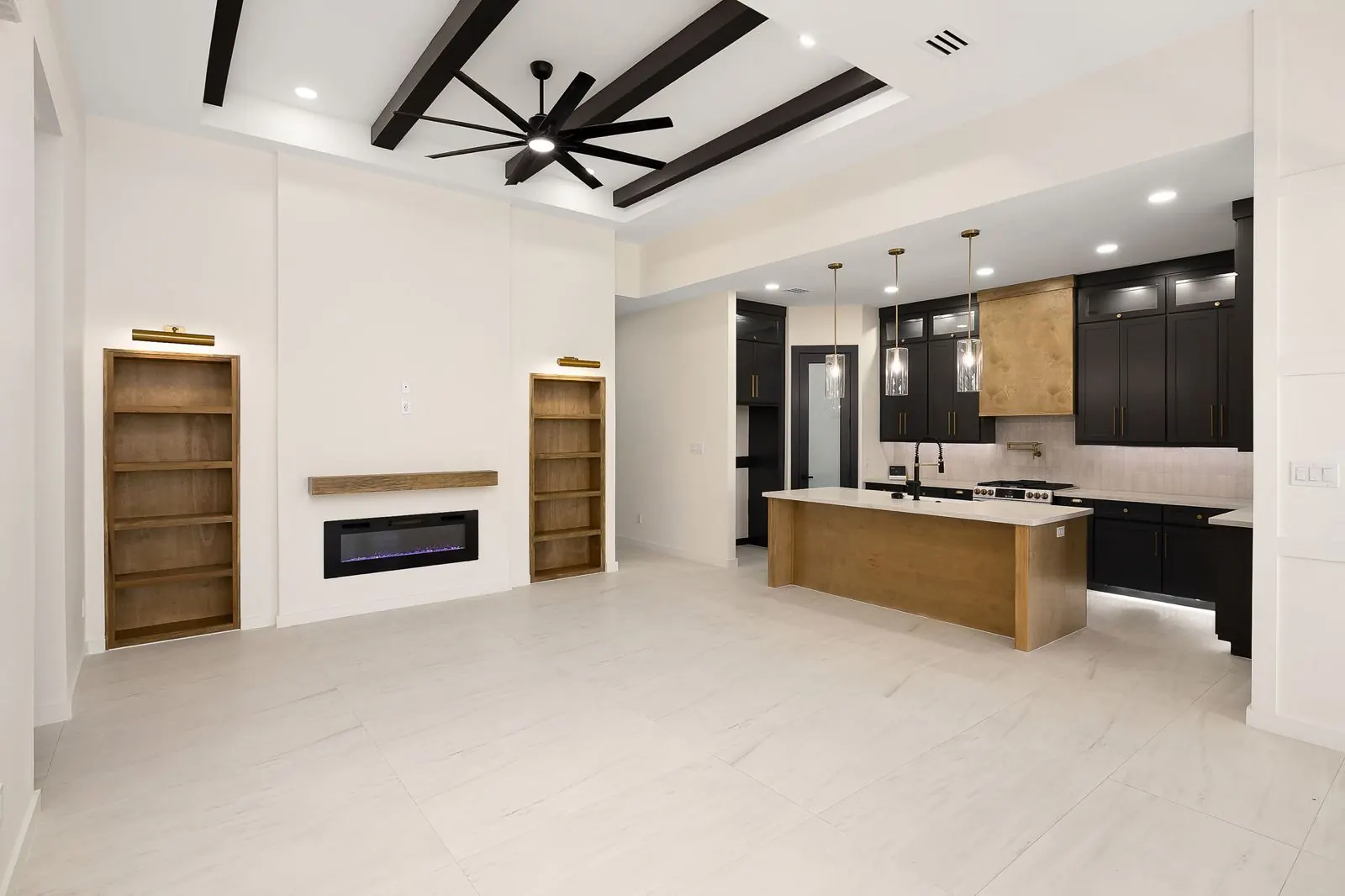
Before You Begin
Is a home inquiry a commitment?
No. An inquiry tells the Kratos team about your plans. It is not a confirmed consultation, financing approval, project acceptance or construction commitment.
Does the design deposit mean I have signed a contract?
No. A design deposit starts your floor-plan work after pre-approval for financed buyers. It is not a signed construction contract and it does not mean your loan has closed.
What if I plan to pay in cash?
Let us know in your inquiry. We will talk with you about the appropriate next steps.
What should I have ready before I inquire?
It helps to know where you plan to build, whether you own land, a rough construction budget that does not include land, how you plan to finance the home and when you would like to start. If you are not sure about any of it, “Not sure yet” is an acceptable answer.
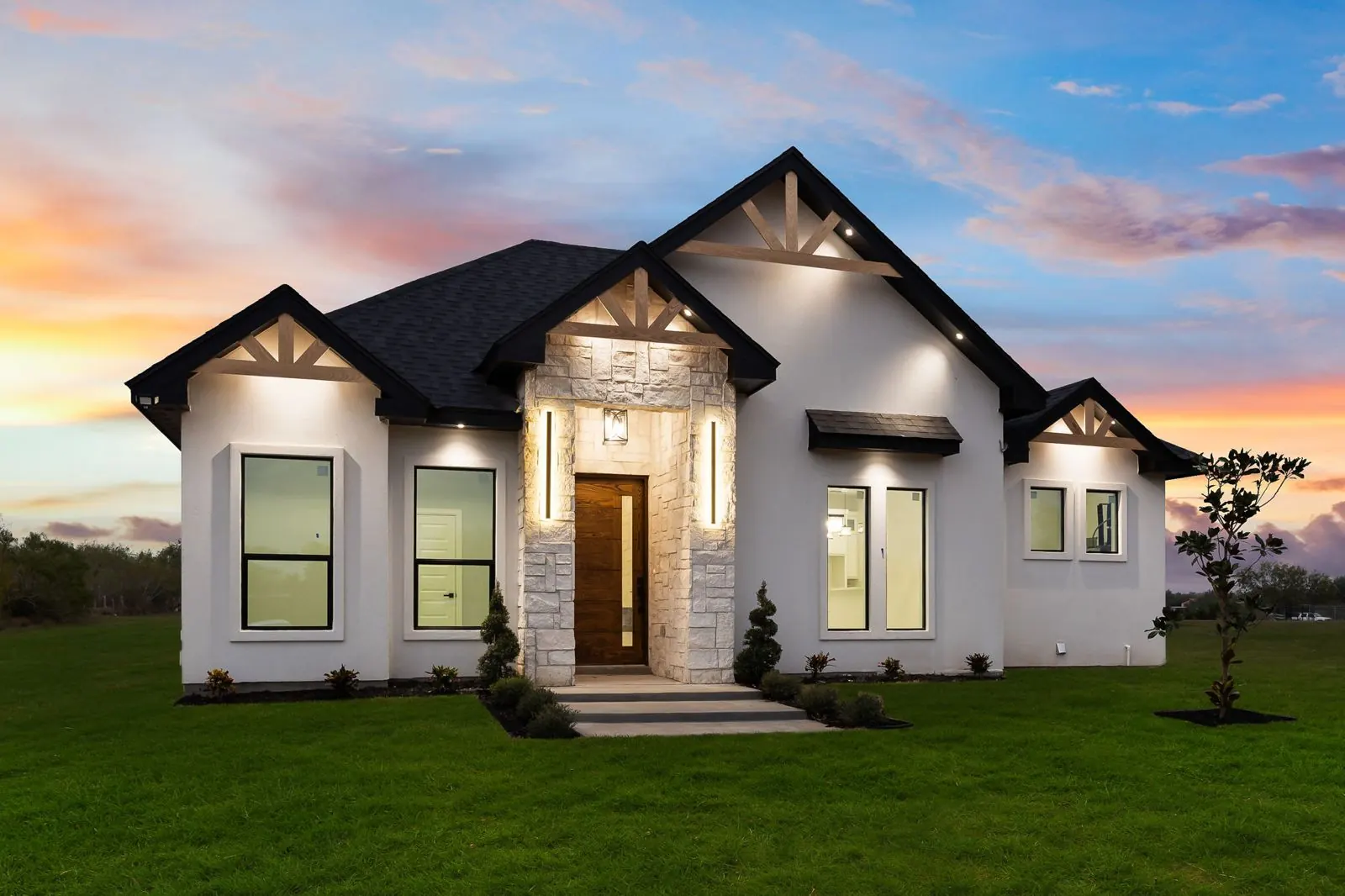
Ready to Plan Your Custom Home?
Tell us about the home you have in mind, where you plan to build and how you plan to finance it. Kratos reviews your inquiry and follows up with the next steps.